Vanguard explains how high-yield savings account rates can boost your savings. Understand straightforward methods to calculate your interest earnings.
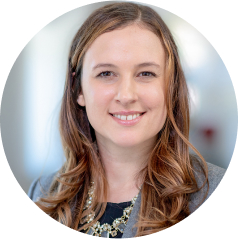


Nicole Townsend, CFA
Nicole Townsend leads Investment Product Strategy in Vanguard Personal Investor, where she conducts investment product research to inform decision-making and strategic action on Personal Investor's product portfolio. In her role, Nicole advocates for the needs and preferences of Vanguard clients as part of the enterprise investment product research process focused on Vanguard's mutual fund and ETF offerings. Prior roles Nicole has held include strategy engagement manager for Vanguard Wealth Management, fixed income specialist in the Portfolio Review Department, as well as a variety of roles held within the Finance division.
Nicole earned a B.A. and a B.S. from the University of Delaware and holds the FINRA Series 7 and 63 licenses. She's a Chartered Financial Analyst® (CFA®) charterholder and a member of the CFA Society of Philadelphia.
Paulo Costa, Ph.D.
Paulo Costa, Ph.D., is a senior behavioral economist in the Investment Strategy Group, where his research interests include behavioral finance, financial planning, and the value of financial advice.
Paulo's current research examines the value clients get from human and digital advisors, the value of personalized financial advice, and the steps investors should consider to achieve financial wellness. His recent work also includes study of the safe withdrawal rate for FIRE (Financial Independence Retire Early) investors. In addition to conducting research, Paulo frequently meets with clients to present Vanguard's thought leadership on investor behavior and financial advice.
Prior to joining Vanguard, his research focused on quantitative equity strategies and how the framing of financial information affects investor behavior.
Paulo holds a B.A. in economics from Yale University and an M.A. and a Ph.D. in economics from Harvard University.
Stephen Weber, CFP®
Stephen M. Weber, CFP®, is a senior researcher in Vanguard's U.S. Wealth Planning Research Group, which is responsible for overseeing the investment philosophy, methodology, and wealth management strategies supporting Vanguard's advisory products and services. His areas of expertise include financial planning, health care planning, portfolio construction, and retirement.
Stephen joined Vanguard in 1992 and has more than 25 years of experience in the financial services industry.
He earned an M.B.A. and M.S.I.S. from Pennsylvania State University and has held the CFP® certification for more than 20 years.
Understanding high-yield savings accounts and how rates work

- A high-yield savings account works like any other bank or credit union account, but typically offers a higher interest rate compared with a traditional savings account.
- You can use compound interest calculators to help determine your savings over time.
- Different factors can affect your savings growth, so it's important to consider them when choosing an account.
What makes a high-yield savings account "high yield"?
The main factor that makes a savings account "high yield" is the interest rate. While some traditional savings accounts offer an annual percentage yield (APY) as low as 0.01%, a high-yield savings account could offer a much greater amount.
Many high-yield savings accounts are offered by digital banks and financial institutions. They have lower overhead costs since they don't have physical branches, and they can pass those savings on to clients in the form of higher interest rates.
Check out Vanguard's high-yield savings account alternative
How to calculate high-yield savings account growth
You'll need the following factors to calculate your savings growth:
- Initial investment amount, or how much money you first deposit in the account.
- Contribution amount, or the recurring amount you add to the account.
- Length of time you plan to save, or how many years you'll keep your money in the account.
- Interest rate, or the amount you're earning on your savings.
- Compound frequency, or how often your interest is added to the principal amount.
The interest rate and compound frequency are particularly important because those are factors determined by your bank or financial institution. You'll want to keep them in mind when choosing a savings account. A higher interest rate means more money earned over time. The more frequently interest is compounded, the faster your savings can potentially grow because you'll start earning interest on top of interest.
How to calculate growth on a high-yield savings account
An online calculator like the SEC's Compound Interest Calculator is a great resource to help determine how much your money will grow with compound interest.
Factors that affect your savings growth
Various elements can affect your savings growth over time. These can include:
- APY rates. Higher APY rates can lead to greater earnings over time. Digital banks and specialized accounts like CDs and money market funds often offer better rates.
- Account fees. Lower account maintenance fees can help you save money over time.
- Compounding frequency impact. More frequent compounding (e.g., daily, monthly) results in higher earnings compared with less frequent compounding (e.g., quarterly, annually).
- Initial deposit and additional contributions. Larger initial deposit amounts and higher contribution amounts will increase how much interest you can earn.
- Inflation. When prices rise and your purchasing power decreases, you'll want to know how to navigate times of rising inflation since ideally you'll want the interest in your savings to be higher than inflation.
- Taxes. Interest is generally taxed as ordinary income. Knowing the tax implications of your interest earnings can help you decide which types of savings accounts or investments offer the best net benefits.
How to compare savings account options
There are several factors to look for when comparing your savings account options:
- Interest rates. Look for accounts that offer a high APY so you'll earn more on your savings.
- Minimum balance. Some savings accounts have minimum account balance requirements, so make sure it's an amount that you can comfortably maintain.
- Withdrawal limits. Some accounts have restrictions on withdrawals, so be sure you have an account that offers you the ability to access your money when you need it.
- Fees. Check to see if there are account maintenance fees and note that some accounts may waive fees if you meet certain requirements, like signing up for e-delivery rather than receiving statements by mail.
- Location. If you're comfortable managing your money online, you may choose a provider that only offers accounts with mobile access. If you prefer in-person banking, make sure you choose one with accessible branches and ATMs.
- Security. Check to see if your savings account offers FDIC insurance and check the coverage it offers. FDIC insurance acts like a safety net for your money and protects your cash in case your bank were to fail.
Not all savings options are built the same
What's the difference between the Vanguard Cash Plus Account and a high-yield savings account?
While Vanguard doesn't offer a high-yield savings account, we do offer the Vanguard Cash Plus Account, which is Vanguard's high-yield savings account alternative that offers a competitive APY1 on your cash, flexible investment options, and FDIC insurance on the bank sweep.2
Vanguard Cash Plus offers 2 ways for you to divvy up your cash. The first option allows you to keep your money in the bank sweep program, where your balances will be in one or more program banks and eligible for FDIC coverage.2 With the second option, you can diversify your money across 5 Vanguard money market funds that invest in short-term, high-quality debt that's eligible for SIPC insurance.
Saving smart starts with choosing differently
Frequently asked questions about high-yield savings accounts
What's the best APY for a savings account?
Since interest rates can vary, it's a good idea to shop around at different institutions to find a savings account that meets your needs in terms of cost, access to your money, and keeping up with inflation.
How does compound interest affect my earnings?
When you make an initial deposit into your savings account, that money can generate earnings. If you reinvest that money, then both your investment and its earnings can generate additional earnings.
Are high-yield savings accounts safe?
High-yield savings accounts offer FDIC insurance, which can protect your cash if something were to happen to your bank.
How do I choose the right savings account?
When choosing a home for your savings, compare the factors that are most important to you, including interest rates, fees, minimum account balance requirements, convenience, and access to your money.
What are the tax implications of earning interest on my savings?
Interest is usually treated as ordinary income, so it's taxed at your regular income tax rate. Some states also tax interest income, so check your state's tax laws. If you earn more than $10 in interest, your bank or financial institution is required to send you IRS Form 1099-INT, which states the amount of interest you've earned. You're required to report this amount on your tax return. Read our article to get answers to other common tax questions.